Introduction Starting your first corporate job can feel like stepping into a completely different world. Suddenly, there are meetings, deadlines, unfamiliar processes, workplace expectations, and people who seem to know exactly what they are doing. You want to make a good impression, prove your abilities, and show that you deserve the opportunity. But in trying to do everything right, you may forget something important: you are allowed to be a beginner. The advice every professional needs during their first corporate transition is simple: stop putting pressure on yourself to prove everything immediately and start focusing on learning what will help you grow. You Don't Have to Know Everything One of the biggest challenges during a first corporate transition is feeling that asking questions will make you look inexperienced. You may hesitate to ask for clarification, stay quiet during meetings, or spend hours figuring something out because you do not want others to think you ar...
 Introduction
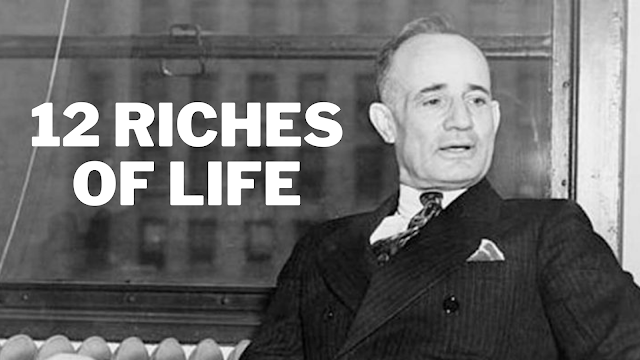
Napoleon Hill's 12 riches of life is one of the most important pieces of advice for all of us. If we learn to implement these tips in our life then we can also become good thought leaders. Everyone gauges riches with material possessions but a person can be called rich if s/he can inculcate the below-mentioned riches. In our last article, we explored the first six riches and now we will understand the rest of the riches.
12 Riches of Life by Napoleon Hill
7. Willingness to Share One’s Blessings: A true leader or a truly great person knows that it is very important to give back to society. It keeps a person grounded and there is a sense of deep self-satisfaction. The simple process of sharing multiplies all the other riches as well. This the seventh and a very important one of the 12 riches of life by Napoleon Hill.8. Labour of Love: It is a well-known saying that when you love what you do, your vocation becomes a vacation. According to Napoleon Hill, the eighth one of the 12 riches of life is the Labour of Love. It refers to finding what you truly love to do, what your true passion is. A great leader finds his passion and puts all his time and effort into it.
9. Open Mind on All Subjects: Napoleon Hill mentions that the ninth one of the twelve riches of life is to have an Open Mind on All Subjects. A person with a narrow mindset can turn down ideas with great potentials. Ideas can be taken or well thought of by an open mind. If you as a leader has an open mind, you’ll be open to new ideas which will add great things to your success journey.
10. Self-Discipline: Discipline is real freedom. It is the freedom from bad habits, laziness, procrastination, etc. It is the tenth one of Napoleon Hill’s 12 riches of Life. Most of the great and successful leaders of the world are highly self-disciplined. They wake up early in the morning, exercise, meditate, read books and understand the value of time.

11. Capacity to Understand People: To influence people, a true leader knows the way to connect with them and that comes with the ability to understand people around you. Thus, the capacity to understand people is the eleventh one of the 12 riches of life mentioned by Napoleon Hill. If you understand them better, they can easily connect with you, cooperate with you and turn out to be great assets for the various initiatives that you may take as a leader.
12. Financial Security: The last one of the 12 riches of life given by Napoleon Hill is Financial Security. One must know the value of money and should understand the ways to save, invest and enhance this wealth.
Summary
The above-mentioned riches are not only riches but are also steps to live a fulfilled and successful life. A person is not rich by just material wealth. There are many other aspects of it. All those aspects have been summed down in pointers by Napoleon Hill as the 12 riches of life. These are not only for the leaders but also for anyone and everyone who wants to live a rich and fulfilled life.
12. Financial Security: The last one of the 12 riches of life given by Napoleon Hill is Financial Security. One must know the value of money and should understand the ways to save, invest and enhance this wealth.
Summary
The above-mentioned riches are not only riches but are also steps to live a fulfilled and successful life. A person is not rich by just material wealth. There are many other aspects of it. All those aspects have been summed down in pointers by Napoleon Hill as the 12 riches of life. These are not only for the leaders but also for anyone and everyone who wants to live a rich and fulfilled life.
Comments
Post a Comment
Please do not add any spam link in the comment box