Introduction Being a teenager has never been emotionally simple, but growing up today brings its own complicated mix of academic pressure, friendships, family expectations, social media, body image, uncertainty, and the constant need to fit in while simultaneously trying to discover who you really are. The Teens’ Guide to Navigate Emotions by Ethan Wells approaches this turbulent stage not by telling teenagers what they should feel, but by helping them understand what they already feel and giving them practical tools to respond more effectively. From the beginning, Wells makes an important distinction: this is intended to feel more like a conversation than a lecture. Drawing significantly from Cognitive Behavioral Therapy (CBT), the book explores the relationship between thoughts, emotions, and actions while translating psychological concepts into language teenagers can actually understand and use. The Teens’ Guide to Navigate Emotions One of th...

Károly Takács was born in Budapest, Hungary on 21 January 1910. Many of us do not know about him but his story inspires many and he is still a national hero of Hungary. He joined the army as a sergeant and his main interest was in pistol shooting. He was not allowed to play in the 1936 Olympics as he was a sergeant and only commissioned officers can participate in games. By 1938 he became a top-notch shooting player of Hungary and the ban was also lifted by that time. Hence he became the national favorite for gold in the upcoming 1940 Tokyo Olympics. Just a few months before the 1940 Olympics he lost his right hand when a faulty grenade exploded in his hands during army training camp. It was a major setback for a person who was at the helm of the world ranking of pistol shooting. At that time he can find so many shoulders to weep over his loss. He spent one month in the hospital to recover from the injury but we can't imagine the mental pain he might have faced at that time. But he concentrated on what he had and not on what he lost. He started practicing with his left hand, the hand by which he can't even write. Its also said that when we concentrate on problems then problems become big and when we concentrate on opportunities then opportunities become big. After one year of that incident, he arrived at a national pistol event. All of the participants were amazed that Takács came to see them at the event and came down to meet him with sympathy. At that time Takács revealed that he was there to challenge all other participants. This came as a shock for others but Takács was determined and won the Hungarian national pistol shooting championship in 1939. He was also a member of the winning team of 1939 UIT World Shooting Championships.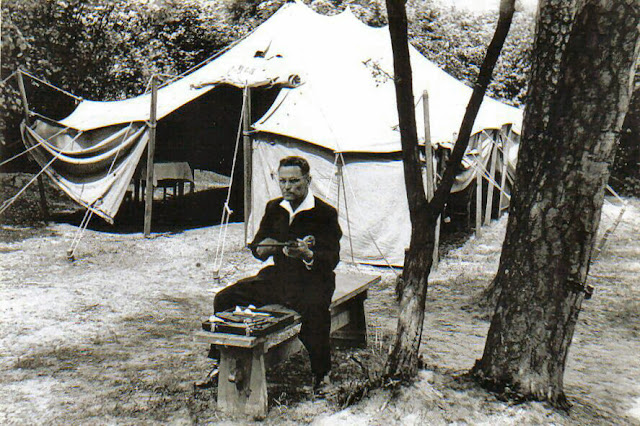

He again became the national favorite for Olympic pistol event but because of World War II, both 1940 and 1944 Olympics got canceled. With the cancellation of two consecutive Olympics, many people suggested Károly Takács must take retirement as his reflexes will definitely slowdown by the 1948 Olympics. In 1948, when Takács was 38 years old he won the gold medal in the Olympics pistol event winning against other international champions. At this point in time, he might have decided to take a peaceful retirement but he decided to compete in the 1952 Olympics. He again won a gold medal in the 1952 Olympics and made a world record by winning 2 consecutive gold medals. He also won 35 national shooting competitions.

Thanks a lot for reading! If you want this in your inbox every week, join the other 6000+ readers today by subscribing to our newsletter.
Please do share, subscribe and comment!!!
Please follow us for exclusive content:
Facebook: https://www.facebook.com/motivationdrive01/
Instagram: http://www.instagram.com/motivation_drive01
TikTok: https://vm.tiktok.com/GkNRUj/
LinkedIn: https://www.linkedin.com/in/%F0%9F%8E%AF-raja-kumar-8ba50372/?originalSubdomain=inYouTube: https://www.youtube.com/channel/UCSrGHVFiwydjmWFqMGytxmg
Facebook: https://www.facebook.com/motivationdrive01/
Instagram: http://www.instagram.com/motivation_drive01
TikTok: https://vm.tiktok.com/GkNRUj/
LinkedIn: https://www.linkedin.com/in/%F0%9F%8E%AF-raja-kumar-8ba50372/?originalSubdomain=inYouTube: https://www.youtube.com/channel/UCSrGHVFiwydjmWFqMGytxmg
Our Website: https://www.motivationdrive.com/?m=1
Comments
Post a Comment
Please do not add any spam link in the comment box